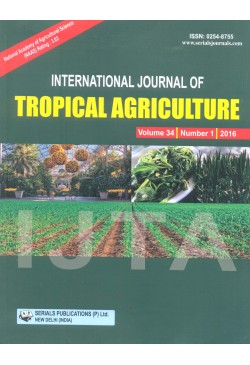
International Journal of Tropical Agriculture
Frequency :Quarterly
ISSN :0254-8755
Peer Reviewed Journal
Frequency :Quarterly
ISSN :0254-8755
Peer Reviewed Journal
Salinity Gradient and Phytosociology in Bhitarakanika North Mangrove Forest
Mangroves are the highly productive wetland ecosystems, strategically located in the interface between land and sea, which serve as an ecotone. They are salt tolerant trees and shrubs that grow in tropical, sub-tropical, tidal coast and extending along estuaries and creeks throughout the world. This is forming a mangrove ecosystem which is highly productive or extending extreme tolerant to different salinity gradients. Specifically, these grow in mud flat areas that are frequently submerged with salt water due to tidal activities of gulfs, seas and oceans. It supports a special kind of food chain called detritus food chain, where mangrove plays a role of a producer. The mangroves are frail ecosystem and mostly depend upon fresh water influx and tidal inflow from the sea to grow. In Bhitarkanika north zone, the water salinity changes diurnally from fresh to saline, so, the community have adapted to the wide salinity gradients over the years resulting in varied and diversified vegetation. Salinity created due to fresh water and saline water inundation due to regular tides of the sea, causes brackish condition in the ecosystem. Since the ecosystem is very fragile and dynamic, it is vulnerable to salinity changes, thereby causing in diversity pattern of the species and establishment of phytosociology. It is observed that, salinity ranges from high to low according to distance from the creek. The saline zone is seen in maximum in bay region followed by estuarine region and then mangrove region. It is observed that Exocarea agallocha is the keystone species among 22 pre-dominant mangrove species being found in pH range 7.5 to 7.8. However, more mangrove species are seen in high salinity zone with pH ranges from 7.9 to 8.5 whereas, the non mangrove species found in non salinity region.
Keywords: Mangrove, salinity gradient, phytosociology
Diversification: A Potential Options for Enhancing Economic Viability and ecological Sustainability in Agricultural Production Systems
Diversification in different agricultural production system is achieving great importance due to its capacity to address the climate change related concerns, food and nutritional security related issues as well as health of natural resources such as soil, plant and water. The diversification is also helps in addressing the insect-pest and disease incidences to certain extend there by reducing the dependence on curative methods. Hence overview of diversification for its capability in achieving the economics and ecological goal in broad sense has carry scientific and policy importance. The present overview indicates the major advances in agricultural production system followed by different variant of diversifications in agricultural production system. The diversification of cereal based production system, inclusion of different production system such as organic farming and natural farming, changes in crop establishment and cultivation methods and inclusion of pulses and oilseeds are highlighted at different research forum; while inclusion of break or catch crop or forage crops for enhancing the soil health and exploring vegetables and medicinal and aromatic plants for diversification enhances economic gain out of diversification. The different components of vertical diversification such as agro-tourism, processing and value addition and energy harvesting through solar panels add both ecological and economical edge over the commercial monoculture.
Keywords: Horizontal diversification, vertical diversification, oilseed and pulses, medicinal and aromatic plants, organic farming, natural farming.
Effects of Heavy metals on Plants Life: An Overview
The soil is a valuable source of nutrition for most of the plant species. But now days most of the agricultural soils around the world are contaminated with heavy metals like cadmium (Cd), arsenic (As), mercury (Hg), etc. The high concentration of the heavy metals creates toxicity to all life form micro-organism to human beings. Although the heavy metals are naturally occurring elements that have a high atomic weight. Geological and anthropogenic activities enhance the concentration of metals and affects the plants morphology and physiology. Some of the activities such as mining of metals, burning of fossil fuels. use of enormous fertilizers and several pesticides and other agrichemical in agriculture alter the productivity of crop. Growth reduction as a result of changes in physiological and biochemical process in plants growing on heavy metal-polluted soils has been recorded.
Keywords: Heavy metals, dangerous, effects on plants, soil pollution, cadmium, arsenic, agrochemical
Plant-based Products for the Prevention and Treatment of COVID-19: A Review of the Current Evidence & Future Perspectives
The coronavirus disease 2019 (COVID-19) have emerged as a serious threat to mankind, killing millions of peoples worldwide, and damaging the economy. This review explores the potential of plantbased products as sources of immunomodulators, and antivirals for COVID-19 prevention and treatment. It covers various plants, plant-based products, such as extracts, compounds, and evaluates their modes of action. The review suggests plants like Azadirachta indica, Nigella sativa, Withania somnifera, and Eurycoma longifolia and some plant-based products have significant potential for COVID-19 prevention and treatment, but more clinical trials and regulatory approvals are required to verify their effectiveness and safety in humans.
Keywords: Antiviral, Extracts, Immunomodulatory, Plants.
Advances in Image Processing Applications for Assessing Leafy Materials
Leafy materials are produced from agricultural crops and forestry plants that have important role in human life and environment. Expert-based assessment of leafy materials by humans is time consuming, expensive, and difficult and is sample-destructive task in some cases. Image processing has different applications through simulating vision sense of humans to assess color, textural, and morphological characteristics of objects and can be further enhanced by utilizing spectra beyond human visible range. It is considered as a beneficial and practical tool due to its high speed, accuracy, and repeatability and also it is a low cost and nondestructive technique compared to expert-based assessments. The goal of this paper is to review the advances of image processing applications for assessing the leafy materials including herbs, aromatic, and medicinal plants.
Keywords: Herbs, Medicinal plants, Aromatic plants, Leaf, Machine vision, Digital image processing
In silico evaluation of the anti-SARS-CoV-2 activity in bael tree (Aegle marmelos (L.) Corrêa)
SARS-CoV-2 (Severe Acute Respiratory Syndrome-Coronavirus-2) is the cause of COVID-19, a highly contagious respiratory infection. The COVID-19 pandemic has induced serious adverse impact on the human population. It is a rapidly mutating virus which induced multiple epidemic waves globally and therefore the currently developed vaccines’ efficacy is dubious. Since time immemorial plant-derived medications have been utilized to treat viral infections and many plant-derived drugs used in modern medicine found to have multiple therapeutic activities and prescribed for more than one disease. Identification of such type of phytochemicals with simultaneous inhibitory activity on different stages of pathogenicity is the best way to eradicate the mutating pathogen.
Method: A total of 150 phytochemicals from Aegle marmelos (L.) Correa, 135 were procured from databases and 15 phytochemicals were identified through LC-MS analysis of the methanolic extract. These were screened against the five therapeutic targets of SARS-CoV-2 namely spike protein, ACE2, Mpro, RdRp, and COX-2 through molecular docking using AutoDock Vina in PyRx 0.8 software. Further H- bond interactions, drug-likeness and ADMET were analyzed to identify the lead compound with multi-targeting properties.
Results: Overall results revealed that out of 150 phytochemicals screened, 38 of them have free energy of binding ? -6 kcal/mol against all five forenamed targets, making up 25% of the phytochemicals with multi-targeting properties, and the compound rutin was selected as the best lead molecule against SARS-CoV-2 based on binding energies, hydrogen bond interactions, pharmacokinetic analysis, and drug-likeness studies.
Keywords: SARS-CoV-2, COVID-19, Aegle marmelos, in silico screening
Thermal Indices and Phenological response of Sorghum (Sorghum bicolor L.) Genotypes for drought tolerance Under Varied Moisture Regimes
Twenty sorghum genotypes were grown in Rhizotron under two moisture regimes (stress and non stress) for characterization of morpho physiological, Thermal and yield attributing parameters for drought tolerance in Sorghum genotypes. The genotypes differed significantly with respect to various morpho- physiological, biochemical and thermal traits. days to 50 per cent flowering was recorded in genotype CSV29R followed by genotype CRS70, PEC15, PEC30 and Phule suchitra. Days to physiological maturity was recorded higher in genotype CSV29R. Among the genotypes, significantly higher mean PTI was recorded in CRS73 and significantly higher mean PTI was recorded in CRS73. Further HUE was recorded higher in RSV1837. The investigation showed non stress condition had favorable agro-climatic conditions particularly temperature, day length and sunshine hours interms of required accumulation of GDD, PTI and HUE from 50% flowering to physiological maturity. The genotype RSV1837, RSV1984, SVD3165 and CRS70 which recorded higher grain yield and harvest index, also showed higher values in morpho-physiological and biochemical parameters. The genotype RSV1837, RSV1984, SVD3165 and CRS70 could be considered as drought tolerant sorghum genotypes. These could be promoted or used as promising donor parent in hybridization programme.
Economics Analysis of Kharif Sweet Corn in Kolhapur District of Maharashtra
The present investigation was undertaken to examine the resource use productivity and resource use efficiency, costs and returns, marketing channels, disposal pattern, estimate the marketing cost and price spread in production and marketing of sweet corn. The results revealed that the average per hectare total cost of cultivation (cost ‘C’) was ` 97,832.79 at the overall level. The average per hectare production and gross income were worked out to 96.13 quintals and ` 1,97,263.50, respectively. The benefit cost ratio of kharif sweet corn was 2.02. The production function analysis revealed that regression coefficient of bullock labour and nitrogen were positive and significant and the highest MVP to price ratio was of bullock labour followed by nitrogen which were greater than unity. This implied that further increase use of above indicated resource would bring higher returns. Per quintal net price received by producer was ` 1428.67 and ` 1429.52 for Channel-I and Channel-II, respectively. The per quintal marketing cost incurred by producer was highest in Channel-II (` 54.77) and Marketing efficiency of kharif sweet corn it was highest in Channel-I (7.33). The study therefore recommended that, government and the private sector should make timely availability of affordable soft micro credits or loans to the farmers to strengthening production activities, for excellent and effective processing and storage of the product as well as organizing out growers to same as source of recommended variety of seeds for specially sweet corn production purpose to the farmers. Government and research institutions should provide improved agricultural inputs like seeds with traits of drought and pest resistant, short duration. Therefore, government should focus on technological upgradation and effective market support to the producers. Efforts should be taken by the government to procure seeds and chemicals at a lower cost to the farmers and also the middlemen involvement should be reduced.
Keywords: Marketing ,Input out, Production Function
Application of Bio-Regulators and its Effect on Productivity of Barley (Hordeum Vulgare L.) in Arable Land of Bundelkhand region (U.P.) India
A field experiment was conducted on sandy loam soil of Govt. Agriculture Farm of Bohadpura, Orai (Jalaun) during rabi season of 2021-2022. The experiment was comprised of three bio-regulators (500 ppm thiourea, 100 ppm thioglycollic acid and 100 ppm salicylic acid) spray at 40 and 60 DAS with water spray. Foliar spray of bio-regulators (TU,TGA and SA) significantly improved plant height, dry matter accumulation, effective tillers per meter row length, spike length, grains per spike and test weight of barley over water spray control. The maximum grain yield (2844 kg/ha), straw yield (3202 kg/ha), biological yield (5945 kg/ha) and harvest index (47.98%) were obtained with 500 ppm thiourea at 40 and 60 DAS.
Keywords: Bio-regulators, Hordeum vulgare, Productivity, Salicylic acid (SA), Thioglycollic acid (TGA), Thiourea (TU)
Use of vacuum assisted microwave dehydration for the development of instant soy paneer- green peas curry mix
The study was conducted to develop an instant curry mix that not only fulfils the requirements of a busy lifestyle but is a rich source of nutritional components. Vacuum-assisted microwave drying is one of the most suitable technologies for heat-sensitive materials due to its faster drying rate, better rehydration qualities, and retention capability of color, texture, and nutritional profiles. Vacuum-assisted microwave drying took a considerably shorter drying time for the soy paneer (3 min) and green peas (4min) at 600W microwave power and 250 mbar vacuum pressures. The product showed excellent rehydration characteristics due to the porous structure in the dried products which was achieved by the application of vacuum in microwave drying. The instant curry mix was prepared using dehydrated soy paneer and green peas along with spice mix. The developed product showed 6 min rehydration time in boiling water and a shelf life of 12 months when packed in PP pouches based on the sensory scores.
Keywords: Soy paneer; Vacuum; Microwave; Drying, Rehydration.
Adoption of Improved Animal Husbandry Practices by Dairy Farmers in Meerut, Raebareilly and Prayagraj District of Uttar Pradesh
This study was conducted to ascertain the extent of adoption of improved dairy husbandry practices in the Meerut, Raebareilly and Prayagraj district of Uttar Pradesh. The study was undertaken in 5 villages in 3 district of Uttar Pradesh and 75 dairy farmers were selected randomly for the structured interview. The study revealed that the overall extent of adoption of improved animal husbandry practices in the study area was found to be 74.99 %. The overall highest adoption rate was for reproductive and calf management (88.80 and 82.93%) followed by milking and general management (80.00 and 79.56%), while the adoption of scientific healthcare and feeding management (61.33 and 57.33%). A greater extent of adoption was observed in reproductive, calf management, milking management followed by general management, healthcare and feeding management practices. The extent of adoption on feeding management was found to be very lower as compared to other management practices.
Keyword: Adoption, dairy farmers, animal husbandry practices, management
Pomegranate (Punica granatum)-A Potential Fruit Crop in Temperate Ecosystem
Pomegranate is native of Iran and cultivated extensively in the Mediterranean countries like Spain, Morocco, Egypt, Iran, Afghanistan and Baluchistan etc. It is also grown to some extent in Burma, China, Japan, USA, USSR and India. Pomegranate has been cultivated since ancient times under diverse agro-climatic conditions. Traditionally it is growth in tropical, subtropical and arid regions. In India its mainly grown Maharashtra, Karnataka, Andhra Pradesh, Gujarat, Tamil Nadu and Rajasthan. It grows wild in Western Himalayan regions that include states like Himachal Pradesh, Jammu and Kashmir and Uttarakhand. Huge variability of wild types pomegranate (Acidic) also found in Sunny, Tatapani and adjoining areas in Shimla Himachal Pradesh which can be exploited for anardana purpose. It is deciduous in temperate ecosystem and an evergreen or partially deciduous in tropical and subtropical conditions. In temperate region, pome and stone fruits are the major fruit crops widely grown as a commercial venture. With the changing scenario of climatic conditions in hilly areas, pomegranate is becoming an alternative fruit crop for this region and it has great potential to grow in Himachal Pradesh and other hilly states. In Kullu, Bajaura area of Himachal Pradesh, pomegranate cultivation become boon for orchardist where apple quality was not upto the mark due to climate change. Study showed that pomegranate need mild chilling requirement for flowering and fruiting particularly mid and foot hilly region.
Keyword: Pomegranate, Potential, Temperate Ecosystem
Relative Toxicity of Some Insecticide Against Pectinophora Gossypiella (Saunders) In Laboratory
The experiment was conducted during the year 2019-20 in the Toxicology Laboratory of Department of Entomology, Dr. PDKV, Akola. The insecticides used as treatments included, Chlorantraniliprole 18.5% SC, Profenofos 50% EC, Thiodicarb 75% WP, Lambda cyhalothrin 5% EC, Fifronil 5% SC along with untreated control (for bioassay studies). Topical application method of bioassay as described by Kranthi et al., (2005) was followed. Toxicity studies revealed no considerable variations in log dose probit assay values for respective insecticides. However, it appears from the bioassay studies that sensitivity to Chlorantraniliprole 18.5% SC, Profenofos 50% EC, Thiodicarb 75 %WP, Lambda cyhalothrin 5% EC and Fifronil 5% SC in P. gossypiella populations, respectively, from Buldhana, Amravati & Buldhana, Yavatmal and Wardha and Wardha was found higher. In the present experiments the five insecticides tested have not shown difference in the trend of effectivity at LC50 or LC90 levels. For Akola, Washim, Amravati, Buldhana, Yavatmal and Wardha populations of Pectinophora gossypiella the relative toxicity trend (at LC90) was [Chlorantraniliprole 18.5% SC] > [Profenofos 50% EC] > [Thiodicarb 75 %WP] > [Fifronil 5% SC] > [Lambda cyhalothrin 5 % EC]. The index of effectiveness, security index (SI) of insecticides was worked out by comparing of dose response with established field use rates. Security index (SI) indicate that insecticides Chlorantraniliprole 18.5% SC, Profenofos 50% EC, Thiodicarb 75 %WP, Lambda cyhalothrin 5 % EC, Fifronil 5% SC are in safe zone (S.I. > 1) and effective for irrespective of location for management of P. gossypiella. A, preferential sequence of insecticide selection for their application against P. gossypiella at different locations have been.
Keywords: Relative toxicity, security index (SI), Laboratory, Bioassay, P. gossypiella
Management of Plant Diseases by Surfactants
Plant disease management is a big challenge nowadays due to high economic losses to the important agricultural crops. The role of surfactants in crop protection has become increasingly common in agriculture sector for improving the efficacy and stability of pesticides/fungicides. Surfactants are organic compounds which modify the surface tension. The surfactant is able to reduce the surface tension of pesticide/fungicides spray and it also increase spray droplets deposition, spread as well as retention on plant surfaces. Hence, their integration in to pesticide/fungicides formulations improves the efficacy of pesticides/fungicides. In plant disease management, the surfactants are commonly used in the pesticide formulations in order to assist the delivery of the chemicals present in the formulation to the target sites either in plants, pathogens or vectors. Surfactant helps in making a good contact with the plant surfaces, increase the retention of the pesticide on the sites for long enough to get the active ingredient to be absorbed into the plants, and finally must be able to reach to the target sites of action. The surfactants are amphipathic in nature having both hydrophilic (water-soluble component) and hydrophobic (water-insoluble component) characteristics. These two components of surfactants help them to get mixed in water or some other liquids easily and to get them frequently adsorb at interfaces where they can find the most favorable energy conditions. Although, a surfactant itself has no biological activity, but it has the ability to facilitate the active ingredient (a.i.) present in the pesticide formulation to get dispersed quickly, stably and uniformly, hence improving the biological effect of the pesticide due to which there is better plant disease management.
Keywords: Pesticide, crop protection, surfactant, agrochemical formulations.
Milk Production efficiency and its Determinants in Madhya Pradesh
Dairying is the important segment of the livestock which is the usable option for diversifying the agricultural economy. India has been a leading producer of Milk for extended period. The study was undertaken in the Madhya Pradesh. The study focusses on analyzing the trend of milk production in Madhya Pradesh. It also focusses of the impact of various variables associated with technical efficiency of milk yield. Despite the impressive growth in milk production in the state, due to the increase in adoption of cross breed cow and change in composition of animals, this the gross value addition in livestock is declining continuously. It is found in the study that the variables like labor use, green fodder and grain use have a positive impact on efficiency of milk yield and use of dry fodder negatively impact the efficiency of milk yield in Madhya Pradesh.
Keyword: Growth, Livestock, Milk Yield, Efficiency, Stochastic production frontier, Madhya Pradesh
Dairying is the important segment of the livestock which is the usable option for diversifying the agricultural economy. India has been a leading producer of Milk for extended period. The study was undertaken in the Madhya Pradesh. The study focusses on analyzing the trend of milk production in Madhya Pradesh. It also focusses of the impact of various variables associated with technical efficiency of milk yield. Despite the impressive growth in milk production in the state, due to the increase in adoption of cross breed cow and change in composition of animals, this the gross value addition in livestock is declining continuously. It is found in the study that the variables like labor use, green fodder and grain use have a positive impact on efficiency of milk yield and use of dry fodder negatively impact the efficiency of milk yield in Madhya Pradesh.
Keyword: Growth, Livestock, Milk Yield, Efficiency, Stochastic production frontier, Madhya Pradesh
Identification of Promising drought Tolerant Genotypes in green gram [Vigna radiata (L.)]
An experiment was conducted to screen 200 germplasm accessions of green gram for drought tolerance using augmented design during summer 2015 under drought stress condition. ANOVA revealed high significant differences among germplasm accessions for yield, yield component traits and also for drought tolerance traits. Mean squares attributable to ‘Genotypes vs check entries’ were significant for all the traits except seeds per pod and relative water content. Promising drought tolerant genotypes are identified based on the value of seed yield per plant under drought stress condition. The genotype LGG-583 is identified as most promising drought tolerant genotype from among 200 germplasm accessions since this genotype gave highest seed yield per plant (11.05) compared to all other genotypes under drought stress condition. Genotype LGG-595 is second most drought tolerant genotype followed by LGG-585 with values 10.73 and 9.97. Similarly, AKL-225 was most drought susceptible genotype (0.82) followed by AKL-194(0.84).
Keywords: Green gram germplasm, Drought tolerance, Promising genotypes
Impact of Heavy Metal Pollution on the Biotic & Abiotic Components of the environment
The environment includes biotic and abiotic components interacting as a system and also contains organic and inorganic minerals in optimal concentration that are required by living organisms for their growth, development, and metabolic activities.Due to natural and anthropogenic activities the availability of these elements has drastically increased in the ecosystem causing pollution.Heavy metal (HM) is one of the naturally occurring elements that generally threaten plant, animal, and human health.However, some heavy metals are biologically essential elements required in the body/plant or as constituents of important enzymes although in trace amounts while others are non-essential and are ranked as priority metals due to their high level of toxicity with no biological importance even at low concentrations. The non-degradability property of heavy metals contributes to its persistence and subsequent accumulation in the biota and the food chain which is of public health significance to humans and animals. The soil environment is highly prone to HM contamination due to physiological, biochemical, metabolic, and biogeochemical processes that occur within the environment mostly mediated by microbes.
Keywords: Heavy metal; pollution; environment; microorganisms; ecotoxicology.
Growth, Productivity and Profitability Enhancement in Delayed Planting of Soybean through Integrated Nutrient Management
A two years experiment was conducted to assess the performance integrated nutrients on soybean sown on different dates. Late sowing of soybean [Glycine max (L.) Merrill] due to various reasons affects the growth and yield negatively due to less duration of vegetative and reproductive growth. Among various factors responsible for low productivity Soybean, in discriminate fertilizer use is a major factor. The result revealed that sowing of soybean on 1st July with 75% RDF + FYM @ 2.5t/ha was observed significantly superior over the rest of the treatments or their combinations with respect to growth, productivity and profitability (Table-2). Economically, this combination of date of sowing and fertility level also find remunerative over the other treatment combinations. Under delayed sowing, 75 % recommended doses of fertilizers along with 5t FYM per ha is more productive and profitable under prevailing situations of Gwalior region.
Keywords: Soybean, sowing dates, fertility levels, FYM
Raw and Ripe Banana Powder for Nutritional & Economic Sustainability
The present investigation was undertaken with an objective to assess the nutritional composition of raw and ripe banana powder. It was prepared by drying fully grown, mature and peeled, raw and ripe Bananas in a dryer. The peeled fruit was treated with KMS (1%) for 10 min before drying to improve the color and shelf life of the final product. Banana powder preparation is usually carried out as a means of preservation and value addition. The drying process removes about 96% of water content. Dehydrated Mitle raw banana product was found to be a far more concentrated source of calories-264.67 Kcal, Carbohydrates (76.67g), Protein (2.67g), and about 3 times higher in potassium (961mg) than the source fruit, respectively. Whereas, dehydrated ripe banana powder was found to produce 362 Kcal of energy, carbohydrate (86.50g) and Protein (3.69g) per 100g. Both the products were highly nutritive and shelf stable up to 1 year. These products can be blended with other cereal flours in the form of composite flours for making dosa, chakli, bhaji powder, chutney powder, millet mix, nippattu, confectionaries and weaning formulations.
Keywords: Raw and ripe banana powder and nutritional composition
Effect of Microbial consortium (Azotobacter and Mycorhiza) on Nitrogen losses and yield in Wheat (Triticum Aestivum L.)
Nitrogen is one of the most vital nutrients required for wheat growth and production. Nitrogen losses from the agroecosystem lower soil fertility, crop yield and disturb the environment. Nitrogen losses in agroecosystem majorly occur through ammonia volatilization and denitrification. Therefore, the need of the hour is to explore various microbial consortium approach to improve nutrient supply along with reducing the nitrogen losses and synchronise with nutrient demand of crop. Under this research 4 different treatment had been taken those are Control (unfertilized, Tc), Azotobacter (Ta), Mycorrhiza (Tm), Azotobacter + Mycorrhiza (Tam). Tam showed highest available soil nutrient such as P, and K and also showed vigorous root growth, which increase the uptake of soil available nutrients. The cumulative emission from ammonia flux in plot receiving microbial consortium treatment from 5.84 to 6.25 kg ha-1 and denitrification losses varied from 3.6 to 3.9 kg ha-1, while it was recorded minimum in the plot treated with Tc. The yield obtained under Tam plot recorded as 5.34 t ha-1, which is higher as compared to plot receiving treatment Tc i.e., 2.73 t ha-1. Thus, using microbial consortium as nutrient practices proved to be reducing nitrogen losses as well as increases crop yield.
Keywords: Ammonium volatization loss, Azotobacter, Mycorrhiza, Denitirification loss, Root traits
Effect of different N levels and with Foliar Application of Nano Urea and Urea on Increasing Production and Productivity of Wheat
This study was performed to the evaluation of nitrogenous fertilizer with foliar spray of nanourea and urea on the wheat plant under irrigated conditions. An experiment was carried out in theRabi season during 2021-2022 at a research farm, College of Agriculture ,Gwalior RVSKVV. The experiment was designed as a Randomized Block Design with thirteen treatments and replicated thrice. Studied traits included plant height, no. of ear head, test weight, biological yieldand seed yield. According to an analysis of variance, all treatments had significant effects on all studies traits. according to mean comparison, control (without N only) led to 44.4%, 41.7% and 40% reduction in seed yield compared to 100% RDN with two sprays of nano urea, 75% RDN with two sprays of nano urea and 100% RDN with one spray of nano urea, respectively. in conclusion, application of 50% RDN with two sprays of nano urea at tilllering and jointing stage could be increased seed yield and cut down 130 kg urea/ha and statistically equivalent to 100% RDN with one and two spray of nano urea as well as with two sprays of urea (5%); and 75% RDN with one and two sprays of nano urea as well as with two sprays of urea(5%).
Keywords: Nano urea, urea, foliar application, soil application, growth, yield
Pusa Khor: A Walnut Cultivar showed the Potentiality of Cluster-bearing Habit
Walnut (Juglans regia L.) is one of the most important temperate nuts grown in India. It is grown in Jammu & Kashmir, Arunachal Pradesh, Himachal Pradesh and Uttarakhand under rain fed and poor soil conditions in marginal lands. Jammu &Kashmir accounts for almost 98 per cent of the country’s output. Walnut is grown in Himachal Pradesh and Uttarakhand to a limited extent. In Himachal Pradesh, it is grown in a couple of some of the districts. They are not only delicious but also a complete functional food because they not only provide nutritional but also medicinal health benefits. They are unique among nuts because they are loaded with omega -3 fatty acids, and various other bioactive compounds, antioxidants, fibre, vitamins, minerals, and phytosterols and produce a high-quality wood. There is an increasing interest by consumers in eating walnuts. The existing genetic diversity of walnuts in Himachal Pradesh (H.P.), India is very important for walnut breeders. For this reason, our study evaluates the tree characteristics of the walnut cultivar “Pusa Khor” which has been commercialized in H.P. ‘Pusa Khor’ is a new walnut cultivar with a high number of nuts per cluster. This walnut cultivar showed both lateral and terminal bearing habit. This walnut cultivar has a high estimated yield, with a nut weight of 9 to 16 g and a kernel weight of 3.5 to 7 g. ‘Pusa Khor’ was selected among a diverse range of genotypes in the Chamba district of Himachal Pradesh, India. The objective of this exploration program was to obtain promising cultivars among seedling populations characterized by important tree habits, nut traits, and resistance to biotic and abiotic stresses.
Keywords: walnut, Juglans regia, walnut breeding, cultivars, Pusa Khor, cluster bearing
Nanoforms of Essential Metals: Agricultural Potential and their Impact on Soil Health
With the current scenario of population explosion, it is observed that imbalance has been created between food and nutrition supply and its demand. On 15th November, 2022 world population crossed the mark of 8 billion and is estimated to cross 11 billion by 2100 (UN, 2023). To solve the problem of feeding this ever-growing population and to cope with global climate change, nanotechnology can be a solution. Compared to other fields of nanotechnology application, like medicine, materials and energy, agriculture is still at infancy and hence have a scope of revolutionizing in this sector. Major classes of manufactured nanomaterials include, inorganic nonmetallic, metals and their alloys, and carbon based. Among these classes, essential metals viz. manganese (Mn), iron (Fe), nickel (Ni), copper (Cu), zinc (Zn) and molybdenum (Mo) are considered vital for growth of plants and thus have role in agricultural potential. Nanometals have various roles in enhancing agricultural potential, such as growth and yield promotion, induction of phytochemical production and providing tolerance against biotic and abiotic stresses. Although there are numerous benefits of nanometal application in the field of agriculture, these materials have negative impacts as well. These nanometals have the potency to alter the physical, chemical and biological health of soil. Hence, extensive research to be carried out before the full-fledged application of nanoforms of essential metals to determine optimum doses and application methods and utilize this potent entity for global welfare in a sustainable way.
Keywords: Nanoparticles, essential metals, biotic stresses, abiotic stresses, agricultural potential, soil health.
Adaptation to Environmental Stress in Plants
Current tools have transformed biology into a data-intensive field and meaningfully improved our thoughts on signaling mechanisms in plants. Though, worldwide defense signaling system in plants has not been recognized yet. Very limited knowledge present about the receptors and intercellular signaling molecules/ process indulged in cell communication in plants. In this concern, emergent indication shows that the group of reactive oxygen species (ROS) mainly available common in any plant reaction to different environmental stresses signifies a fact that shows that number of mechanism come together to defend the stress. In this review, we touch base on the complexity of signaling process to combat the environmental stress. An importance of signaling molecules with special care of ROS is the main source of platform in plants will be discussed. The relations among ROS and signaling molecules such as calcium, G-protein, plant hormones, several transcription factors will be mainly considered. A improved knowledge in plant signaling mechanism would benefit transform new approaches to increase the plant production under the situations of the accumulative severity of environmental conditions and supply of food and energy worldwide.
Keywords: Plant stress, signalling, transcription factors, plant production, environment
Problems and Prospects of Water Resources Management in the Somali State, Ethiopia
Physiological and molecular mechanism of combined heat and drought stress tolerance in major millets
Millets can be used as food, forage and as a source of bio-energy. As most of the millets are considered to be stress tolerant they are ideal to study the stress tolerance mechanism. Drought and heat stress resistance in plants is regulated by hundreds of genes that control various morphological and physiological responses to these stresses. The elucidation of the complex mechanisms underlying combined drought and heat resistance in millets will shed light into the various players involved. Also identifying key causal candidate genes or linked molecular markers can facilitate the fast development of drought and heat tolerant varieties. With the recent advances in NGS technologies it has become quite affordable and easy to sequence the genome and transcriptomes of any plant species to identify and isolate candidate genes involved in the stress tolerance mechanism. Studying the interactive effects of drought and heat stresses on different morpho-physiological attributes and yield parameters is important. The concurrent occurrence of drought and heat is more severe for any crop growth than the single stress and it is most common in natural field conditions. There may be a conserved defence mechanism that exists among different plant species to deal with a combination of heat and drought stress. As millets are considered as stress tolerant in general, studying the stress response mechanism in millets is important. The functionally validated genes could be used as promising candidates in backcross breeding, genomic selection, and gene-editing schemes in pearl millet and other millet crops to increase the yield in drought-prone arid and semi-arid ecologies.
IPR for Creators & Innovators
This paper integrates IPR in digital Environment. It mainly focuses Need and Necessity, Duration of IPR, International Organizations, and Types/Components of IPR along with Copyrights. This paper suggests IPR is an essential human creativity as creators gets incentives in the form of recognition and fair economic rewards under the system of rights. It also suggests that the copyright protection should be encouraging the use of information for creativity and not for creating hurdles in the use of information. IPRs in digital age are of major concern and we have to emphasize more on the practicality to get additional benefit and prosper.
Keywords: IPR, Intellectual Property Right, IPR and Creators; IPR and Digital Environment
Impact of Covid-19 on Gift Shoppers and Other Small Shopkeepers: Situated Near the Ellora and Ajanta Caves World Heritage Monuments
Many factors depend on the tourist destination. Due to the closure of the tourist destination during the Covid-19 period, it has badly affected the economic condition of all the factors that depend on the tourist destination. After visiting any tourist place, the tourist buys a gift from the shop to remember that tourist place. Therefore, it is seen that such shops have started around all the tourist places. The present research article analysed the impact of the Covid-19 pandemic on Gift Shopkeepers and Other small shopkeepers situated near the World Heritage Monuments tourist places that are Ellora Caves and Ajanta Caves. For this primary data were collected through schedules. Before covid-19, these shopkeepers had an average of 99 tourists per day to buy goods, of which foreign tourists accounted for 12.37 percent. After Covid-19, on an average, 72 tourists come to buy goods. The proportion of foreign tourists is 9.23%. From this it is that, there has been a decrease in the total number of tourists coming to shops at the tourist destination and also in the number of foreign tourists. Before covid-19 Shopkeepers in the study area were earning an average monthly income of Rs 21650 whereas post- Covid-19 they are earning an average monthly income of Rs 15450.From this, the average monthly income of gift shopkeepers and other small shopkeepers in the study area has decreased. The decline in the monthly income of the shopkeeper is statistically significant